


You've tried the protocols. The antimicrobials, the probiotics, the elimination diets. Things improve for a while — and then the bloating comes back. The fatigue returns. The symptoms that were supposed to be gone are back like they never left.
If that's your story, there's a good chance nobody has told you about biofilms.
It's not the most glamorous topic. But once you understand what they are and what they do, a lot of chronic gut symptoms start to make a whole lot more sense.
Table Of Contents:
What on earth is a biofilm?
Here's the thing about bacteria that most people don't realise: they're not loners.
Left to their own devices, bacteria don't just float around as individual cells. They organise. They communicate. They band together, secrete a thick, sticky, protective matrix around themselves — and build what is essentially a fortress.
That fortress is a biofilm.
Think of it like a medieval castle. The bacteria are the inhabitants. The matrix they secrete — made of polysaccharides, proteins, and DNA — is the wall, the moat, and the drawbridge all at once. Nutrients flow in. Waste flows out. And anything trying to get in to destroy the colony? It hits the wall and barely makes a dent.
You've already encountered biofilms. The film on your teeth when you wake up in the morning — that's a biofilm. The slippery coating on rocks in a river — biofilm. The reason a wound sometimes refuses to heal — biofilm.
They are one of the most successful survival strategies in the microbial world. And they are operating right now, in your gut.
Where do biofilms set up shop in the body?
Biofilms don't discriminate. They form on teeth, on medical devices, in the sinuses, in the lungs, and in the urinary tract. But for anyone dealing with chronic digestive symptoms, the gut is where they become particularly relevant.
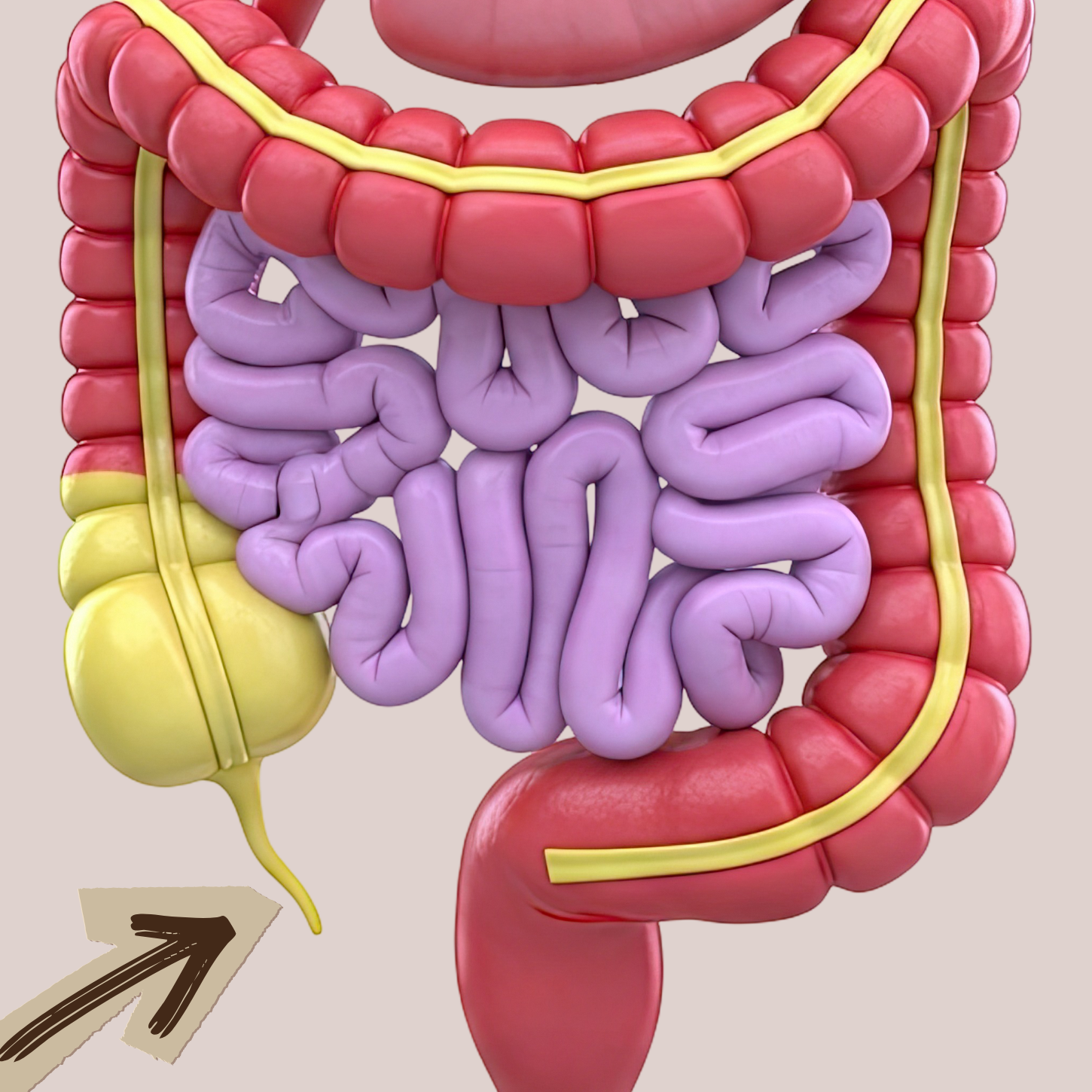
The mucus layer lining your small and large intestine provides the perfect surface for biofilm formation. Bacteria — including pathogenic ones — can attach to the gut wall, form a community, and entrench themselves in a way that makes them extraordinarily hard to shift.
This is especially significant in the context of small intestinal bacterial overgrowth (SIBO). Research has shown that biofilm formation plays a key role in the pathogenesis of SIBO — helping bacteria colonise parts of the gut they shouldn't be in, and making them far more resistant to treatment than they would be on their own.
H. pylori — the bacteria implicated in gastric ulcers and chronic stomach inflammation — is another well-documented biofilm former. Studies consistently show that H. pylori biofilms significantly increase its resistance to antibiotics, which is a major reason why H. pylori infections are so notoriously difficult to eradicate.
Candida, too, forms biofilms — and biofilm-embedded Candida is dramatically more resistant to antifungal treatment than its free-floating counterpart.

Why biofilms are such a problem
Bacteria living inside a biofilm can be up to 1,000 times more resistant to antibiotics and antimicrobials than the same bacteria living freely.
That means a treatment that should theoretically work — doesn't. Not because the antibiotic is wrong, or the dose is wrong, but because the bacteria are hiding behind a shield your body (and your medication) can't easily penetrate.
Here's an analogy that makes this click. Imagine antibiotics as a rainstorm. Free-floating bacteria are standing in the open — they get drenched, and they die. Bacteria inside a biofilm are standing under a thick umbrella. The rain falls. They barely feel it.
This is why gut infections and dysbiosis keep coming back. It's not a failure of willpower, or of your protocol, or of the supplements you're taking. It's a structural problem — and it requires a structural solution.
Beyond infection resistance, biofilms also drive intestinal inflammation. Research has linked biofilm-associated gut bacteria to increased intestinal permeability — what's commonly called leaky gut — where the gut lining becomes compromised and inflammatory signals begin to cross into the bloodstream. This creates a cycle: biofilms damage the gut lining, the damaged gut lining drives systemic inflammation, and the inflammation creates conditions that make biofilms even harder to shift.
Signs your gut might have a biofilm problem
Not everyone with digestive symptoms has a biofilm issue. But if any of these sound familiar, it's worth knowing about:
- SIBO or Candida that keeps coming back after treatment — you feel better, then slowly worse again
- Digestive symptoms that never fully resolve, despite doing everything right
- Feeling significantly worse at the start of a new protocol before feeling better — sometimes called die-off or a Herxheimer reaction, which can occur when biofilms begin to break down and release their contents
- Long-standing gut issues that haven't responded to standard dietary approaches or short courses of antimicrobials
If you've been told your gut issues are "just IBS" or "just stress," and nothing has worked long-term, biofilms may be worth investigating with a functional health practitioner.

What breaks biofilms down?
The good news is that biofilms, while formidable, are not invincible. Several natural compounds have been studied for their ability to disrupt biofilm structure and make the bacteria inside more vulnerable.
N-acetyl cysteine (NAC) One of the most researched biofilm disruptors. NAC breaks down the extracellular matrix that holds biofilms together, and has been shown in multiple studies to reduce biofilm formation and enhance the effectiveness of antimicrobial treatments.
Serrapeptase and nattokinase Two proteolytic enzymes that work through complementary mechanisms. Serrapeptase, derived from silkworm bacteria, breaks down the proteins that hold the biofilm together, making it more permeable to antimicrobial agents. Nattokinase, from the fermented Japanese food natto, targets fibrin specifically, a glue-like substance that certain biofilms use to hold themselves in place. Research shows it can break up established biofilms and help antimicrobials kill the bacteria that are released in the process. Together they cover more ground, which is why they're commonly used alongside each other.
Allicin (from garlic) Crushing garlic and leaving it for ten minutes before cooking activates allicin — its most potent compound. When it comes to biofilms, allicin essentially cuts off the communication lines between bacteria. Bacteria inside a biofilm are constantly signalling to each other to keep the colony organised and intact. Allicin disrupts that signalling, causing the colony to fall into disarray and become far easier to target.
Oregano oil (carvacrol) Oregano oil is more than a kitchen staple. Its active compound, carvacrol, has been shown to both prevent biofilms from forming and break apart ones that are already established. It's one of the more powerful natural antibiofilm agents in the research and it works against a broad range of bacterial species.
Monolaurin (from coconut oil) Monolaurin is a natural compound found in coconut oil. It works by slipping into the outer membrane of bacteria and yeast and disrupting it from within — making it much harder for microbes to stick to surfaces and form a biofilm in the first place. It also has broad antimicrobial properties in its own right, and is particularly worth considering if Candida is part of the picture.
EDTA (with enzyme complexes) Biofilms are a bit like concrete — and metal ions like calcium, iron, magnesium, and zinc are the reinforcing rods holding the structure together. EDTA works by binding to those metals and pulling them out, causing the whole matrix to weaken and collapse. It's often combined with digestive enzymes in specialist formulations designed specifically to break down gut biofilms. One practical tip worth knowing: avoid taking calcium, zinc, iron, or magnesium supplements within a few hours of any biofilm disruptor — these minerals can shore up the very structure you're trying to tear down.
Curcumin (from turmeric) Most people know curcumin as an anti-inflammatory — but its antibiofilm properties are less talked about and just as impressive. It works by cutting off the communication signals bacteria use to coordinate and maintain their colony, and has been shown to both prevent biofilms from forming. As always, pair with black pepper extract — without it, your body absorbs very little of the curcumin you take in.

Quercetin Quercetin is a compound that activates when you let a chopped onion sit before cooking. Found in onions, capers, and apples, it's best known as an anti-inflammatory. But research shows it also stops bacteria from sticking to gut surfaces and prevents biofilms from forming.
Apigenin A lesser-known flavonoid found in parsley, chamomile, and celery, apigenin has been shown to inhibit biofilm formation and disrupt quorum sensing in a range of bacteria. Chamomile tea, it turns out, is doing more than just calming your nerves.
Cranberry (proanthocyanidins) Rather than breaking down an existing biofilm, cranberry stops bacteria from being able to stick to surfaces in the first place — and without that initial grip, no biofilm can form. This is well established for urinary tract infections, but the same mechanism applies in the gut too. One important caveat: standard cranberry juice won't cut it. You need whole cranberry or a high-PAC cranberry extract — the juice simply doesn't contain enough of the active compounds to make a real difference.
Berberine Berberine is a compound found in herbs like goldenseal, barberry, and Oregon grape, and it's one of the most well-rounded natural antimicrobials in the toolkit. It directly disrupts biofilm formation and breaks apart established biofilm matrices across a range of bacteria and Candida. It is a particularly good fit for anyone dealing with SIBO or Candida-related biofilm issues.
Manuka honey This isn't just a wellness trend — it has solid research behind its antibiofilm properties. It disrupts biofilm structure and has been shown to make conventional antimicrobials work better when used alongside them.
Bacteriophages Last but not least, bacteriophages — viruses that specifically target and kill bacteria — are one of the most exciting emerging tools in biofilm science. Unlike antibiotics, which are a sledgehammer, phages are a scalpel: each one targets a specific bacterial strain, leaving the rest of your microbiome untouched. Research confirms they are active against both free-floating and biofilm-associated bacteria, and in some cases, phages use the biofilm matrix itself as a receptor — homing in on the very structure that protects the colony.

Timing matters: why the order of your protocol is everything
This is where most gut protocols go wrong — and it's one of the most important things to understand about biofilms.
If you go straight in with antimicrobials — whether pharmaceutical or herbal — without addressing the biofilm first, you're launching that rainstorm at a well-sheltered colony. The treatment hits the shield. The bacteria underneath are protected. You feel a little better, then relapse. And the cycle continues.
The smarter approach is to use biofilm disruptors first — breaking down the matrix and exposing the bacteria — before introducing antimicrobial agents. This sequence gives antimicrobials access to the bacteria that were previously hidden, dramatically improving treatment efficacy.
Think of it as demolishing the castle walls before sending in the troops.
This is also why some people feel worse before they feel better at the start of a biofilm protocol. When the matrix breaks down, it releases endotoxins and inflammatory compounds that were trapped inside. This is temporary — but knowing it's coming makes it far easier to manage.
Working with a functional health practitioner who understands biofilm protocols is important here. The sequencing, the agents used, and the duration all matter.
The bigger picture
Biofilms are one of the most underappreciated pieces of the chronic gut health puzzle. They explain why some infections keep coming back. Why some protocols work short-term but not long-term. Why the gut can feel like it's fighting against you no matter what you do.
Understanding them doesn't make the journey easier, exactly. But it makes it make sense. And when something finally makes sense, you know where to focus.
Your gut is resilient. Extraordinarily so. It just sometimes needs help with the architecture.


What Do You Think? Comment Below: