
There's a bacterium in your gut that decides how lean you are.
Most modern adults don't have enough of it. Here's what to do.
Hi, it's Sarah — Goodness Lover co-founder. Here's the study that made me rethink everything I thought I knew about weight.
Same food. Same calories. Different bodies.
In 2013, a lab at Washington University in St. Louis took pairs of adult twins where one was lean and one was obese. Then they transferred each twin's gut bacteria into separate groups of germ-free mice. The mice ate the same food. Lived in the same cages. Same temperature, same calories, everything.
Same food. Different bacteria. Different bodies. Your weight isn't just what you eat — it's what your bacteria do with what you eat.
Ridaura et al. · Science · 2013 · Jeffrey Gordon's lab, Washington University in St. Louis
But of the trillions of bacteria in your gut, one keeps showing up at the centre of the lean-vs-obese story.
Meet Akkermansia muciniphila
The keystone bacterium scientists associate with being lean. Even the name tells you what it does: Akkermansia, after Antoon Akkermans (Dutch microbial ecologist). Muciniphila, from the Greek for "mucin-loving."
What's a keystone species? An ecology term — one species whose effect is disproportionate to its size. Pull it out, and the structure shifts. Sea otters in a kelp forest. Wolves in Yellowstone. Small populations, outsized effects. In your gut, that's Akkermansia.
People with high levels of Akkermansia tend to have:
People with low levels... the opposite. Across separate labs over the last decade, Akkermansia keeps showing up at the centre of the metabolic story.
Three things working against your Akkermansia right now
Here's what I keep coming back to when I talk to our community... if you've been doing all the "right things" and not getting the results you used to, this is the part most health content skips.
Akkermansia naturally declines with age. The research is consistent: lower levels in your 50s than your 30s, lower in your 60s than your 50s. It's not a cliff. It's a gradual erosion.
If you've taken any course of antibiotics in the last decade — and most of us have — Akkermansia took a major hit. Some studies show it can take six months or more to recover, and that's if you're feeding it the right things. And when Akkermansia drops, the species that compete with it tend to overgrow... taking up the space it would otherwise occupy.
Most Western diets are heavier on protein and refined carbohydrates, lighter on colourful plants. That means fewer polyphenols — which means the mucin layer Akkermansia lives in is probably thinner than it should be.
The gut you have today is not the gut you had at 25.
The good news: the microbiome is responsive. With the right inputs, can shift in weeks, not years.
It lives in one specific part of your colon
Not the upper colon — the distal colon. A 2016 lab study modelling the human gut found Akkermansia colonising the distal compartment about 10,000× more abundantly than the upper one.
Akkermansia eats the mucus...
...and signals your gut to make more of it.
Self-regulating loop. The more Akkermansia you have, the more habitat it builds. The thicker the mucus layer, the healthier your gut barrier — and the less inflammation, less leaky gut, less food for the bacteria that drive weight gain.
So if you've been adding fiber and nothing changed — here's why.
Why most fiber never reaches it
You were almost certainly using the wrong kind — the kind that never reaches the distal colon where Akkermansia actually lives. It wasn't your fault.
Right intention, wrong delivery zone.
Mucus is both food and home. But Akkermansia thrives faster when it also gets two specific inputs from your plate.
Two things actually feed Akkermansia
Both survive the upper colon. Both reach the distal colon. Together, they compound.
Polyphenols
The compounds that give plants their colour. They survive digestion and the upper colon, reach the distal colon, and multiple studies show they raise Akkermansia abundance. They also signal your gut to make more of the mucin layer Akkermansia lives in.
Slow-fermenting fiber
Not all fiber. The specific kind that ferments gradually — no rapid burst in the upper colon — survives the journey down to the distal colon, and gets to where Akkermansia actually lives. The fiber from the clinical trial below.
Two pathways. Same target. They compound.
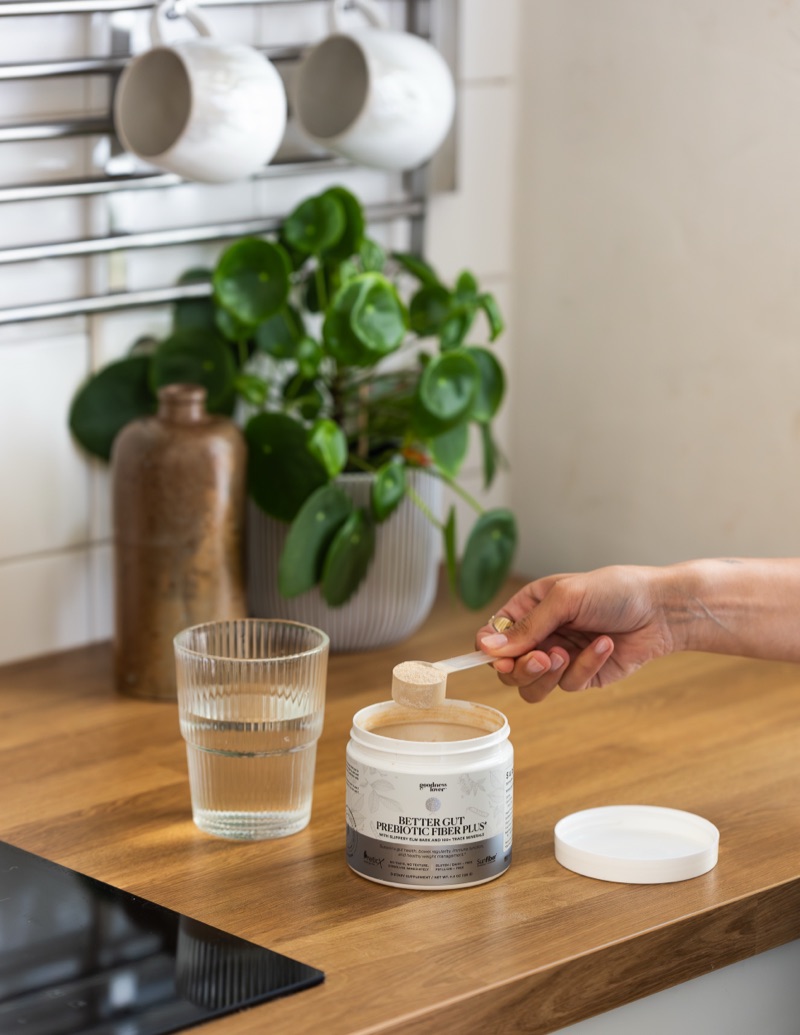
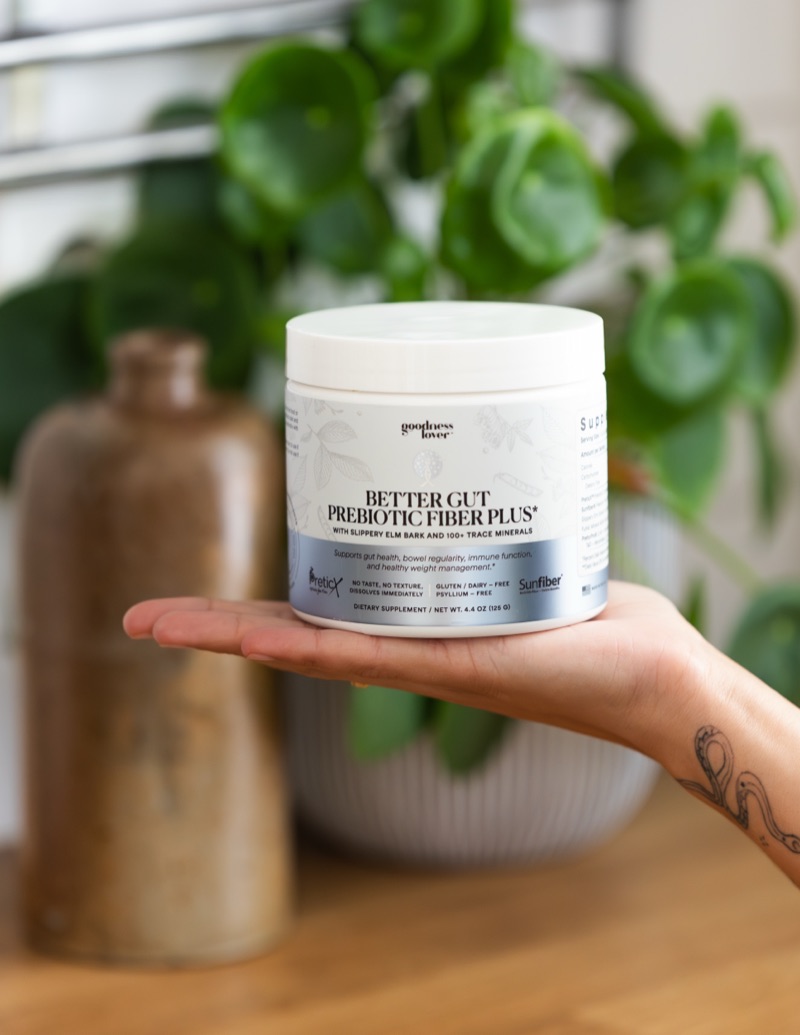
Five ingredients. Four jobs. One target.
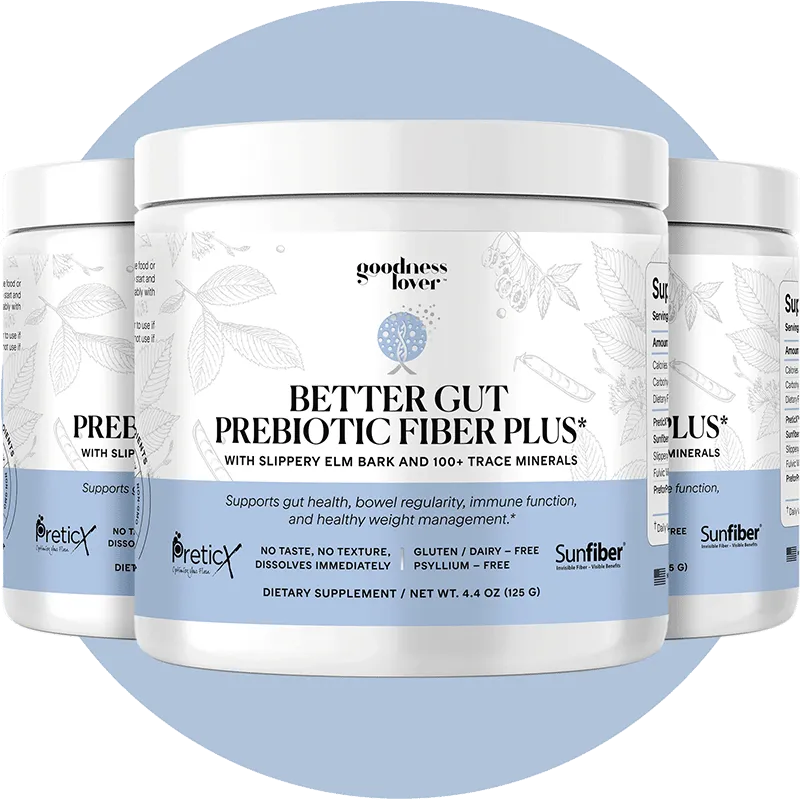
Most prebiotic supplements are one fiber and a story. This is an architecture — built around feeding, protecting, and supporting the keystone bacterium your microbiome science has been converging on for a decade.
Grow Akkermansia via two prebiotic pathways
Trim the bacteria crowding out the beneficial species
A demulcent coating for the gut lining
Trace minerals + a gentler gut environment
Full ingredient walkthrough below.
The formula, ingredient by ingredient
Primary Ingredients
The three active workhorses of the formula — two prebiotic fibers that feed Akkermansia and the beneficial bacteria that work alongside it, and a clinically-studied phage blend that clears the way for those species to establish.
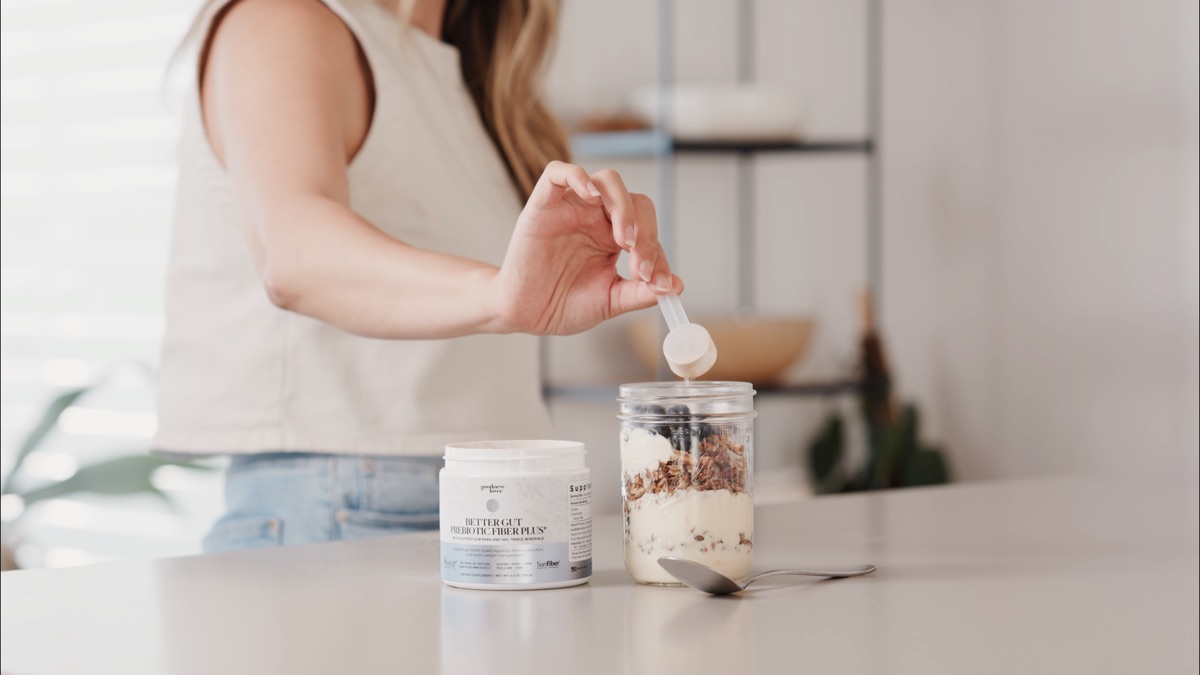
Sunfiber® — partially hydrolysed guar gum
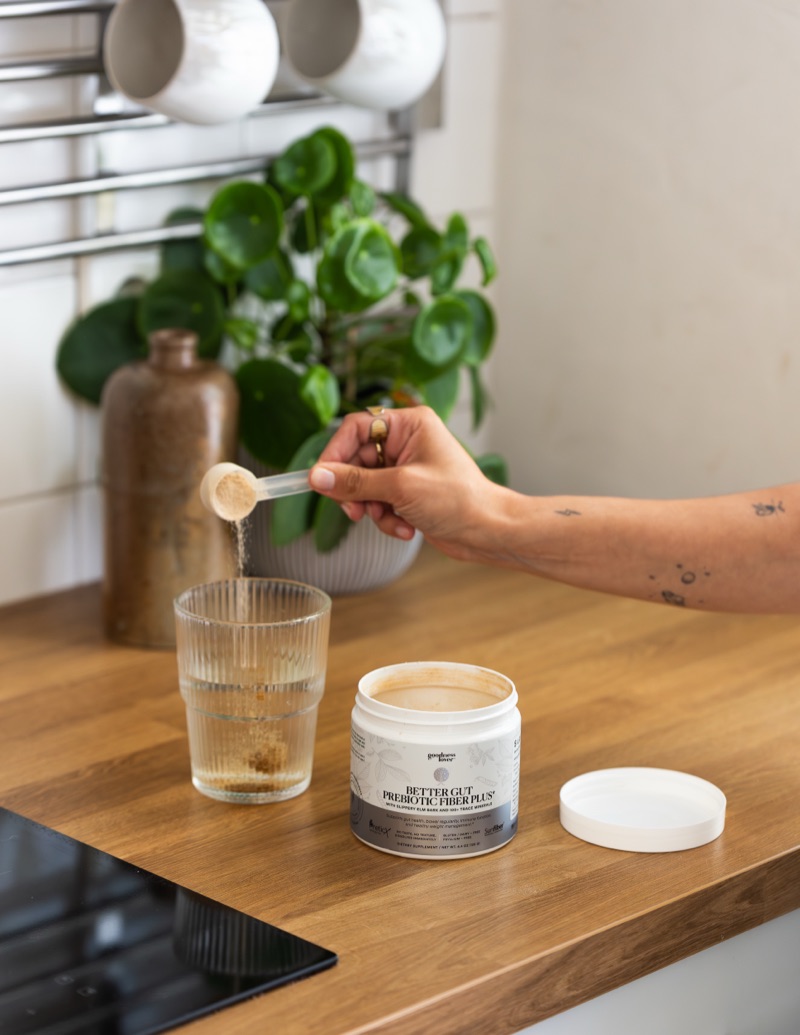
The slow-fermenting fiber from the clinical trial. Reaches your large intestine intact. Feeds your beneficial bacteria gradually rather than producing the gas burst most fiber supplements cause. Directly raises Akkermansia at the clinical dose.
PreticX® — xylooligosaccharides (XOS)
A second-pathway prebiotic. Grows Bifidobacteria that work alongside Akkermansia in the same gut ecosystem, and raises Akkermansia directly. Two fibers, two routes, one target.

PreforPro® — bacteriophage blend
Phages are nature's microbiome editors — naturally occurring particles found in fermented foods, soil, and the gut itself. PreforPro is a clinically-studied blend of four phages that selectively trim competitive bacteria without touching the beneficial species. Clears the way for Akkermansia and Bifidobacteria to establish.
Supporting Ingredients
The two ingredients that round out the formula — soothing the gut lining and supporting the broader microbiome environment so the primary actors can do their work.
Slippery Elm Bark
A traditional demulcent used for generations to soothe irritated digestion. When mixed with water, its inner-bark polysaccharides form a gel-like mucilage that gently coats the gut lining. Laboratory studies also suggest those same polysaccharides may feed beneficial bacteria — including Bifidobacterium, Lactobacillus, and Bacteroides species linked to gut health.
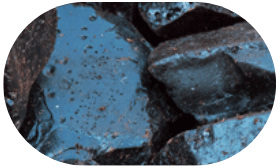
Premium Fulvic Minerals
A naturally chelated source of trace minerals from ancient plant deposits — the kind of minor minerals modern diets tend to miss. Emerging research also points to supporting effects on the wider gut environment.
A note on what's not in this: this isn't a replacement for eating colourful plants. It works with a polyphenol-rich diet — berries, pomegranate, dark grapes, green tea. Both pathways feed Akkermansia. Together they compound.
The pattern we keep seeing
One of the most interesting things I've noticed about this formula... people often notice changes in a similar order.
Not everyone experiences it the same way, of course. But across more than one hundred reviews from our community, a pattern keeps showing up:
First the bloating improves. Then digestion becomes more regular. Then, with consistency, some women start noticing broader changes — including changes on the scale.
Here's how that pattern often unfolds.
Week 1–2: Bloating often starts dropping, digestion can begin to move
This is usually the first thing people notice. The slippery elm and Sunfiber start working almost immediately to soothe the gut and support regularity. Many people report less bloating within days.
"After three days of taking Better Gut Prebiotic Fiber Plus, the stomach problems I had experienced for months subsided. Within two weeks, they had cleared up completely."
"After trying many recipes, herbal and OTC remedies, I thought I'd never find a solution for my constipation problem. Easy to take and worked within a few days. I won't be without it!"
Week 2–4: Digestion feels more predictable, the stomach starts to flatten
As your gut bacteria adjust to the daily prebiotic fuel, digestion often starts to feel more consistent and comfortable.
This is when many women begin describing a flatter stomach, less heaviness, and a more noticeable sense that their digestion is finally working with them instead of against them.
"I have suffered with bloating, smelly gas, constipation, and IBS for over 20 years. Nothing has gotten rid of the bloating until now. It took about 2-3 weeks before all of my symptoms began to decrease. The biggest difference was my flat stomach in the morning and throughout the day."
Week 4–8+: When consistency starts paying off
This is where the deeper benefits of daily prebiotic support can start to show up.
By this stage, the daily prebiotic has given Akkermansia and the supporting bacteria more time to establish — and the broader pattern people describe at this point tends to be different from the early weeks. Less bloating that stays gone. Mornings feel cleaner. The scale starts moving for some women, often alongside better energy and a more predictable sense of digestion overall.
This is also the stage where we start hearing about changes that weren't even what people were looking for when they started.
"Bloating is way down and I'm losing weight without even trying. Joint pain is lessened and energy is increased. I can't believe how much difference it has made."
"I've lost 12 Pounds already and feel healthier than I have in a long time."
Individual results may vary. These are personal experiences shared by members of our community.
This is a daily prebiotic that gradually shifts which bacteria are dominant in your gut. Short-term effects show in weeks. Deeper composition shifts take months. The longer you stick with it, the more your microbiome has time to adapt.
What this isn't
Not a weight-loss drug. It won't replace eating reasonably. If you're expecting twenty pounds in thirty days, this isn't that — and anyone selling you that story is selling you something else.
What it is, is a daily prebiotic that gradually shifts the bacteria producing the compounds that change how your body handles food. Slower. Realer. More durable.
Three studies. One converging finding.
Across two decades, the same conclusion keeps showing up — in different labs, with different methods, on different populations.
The original proof
Mouse-to-mouse transfer in Jeffrey Gordon's lab at WashU. Bacteria alone, without any change in diet, could drive obesity in otherwise identical animals. The first clean answer to "do gut bacteria affect weight?" — yes.
The human follow-up
The twin study you saw above. Same lab, seven years later, this time with human donors. The mouse outcome held: lean twin's bacteria → lean mice. Obese twin's bacteria → obese mice. The finding wasn't a fluke.
The trial that took this from theory to protocol
Healthy adults. Fourteen days. The exact slow-fermenting fiber that's the workhorse of Better Gut. At both 3g and 6g daily doses, Akkermansia rose significantly versus placebo (p = 0.0081 and p = 0.0083).
Specific fiber. Specific bacterium. Fourteen days.

"If you're concerned about maintaining a healthy balance of good bacteria and want them to thrive, this is a wonderful choice."
Dr. Peter Bongiorno, ND
Naturopathic Physician
More from our community
Verified buyer reviews. All on the offer page. These are the ones that capture the pattern cleanest.
"Since taking Better Gut Prebiotic Fiber Plus I have noticed more regularity in my bowels and have shaved off those last few pounds that were lingering."
"An enormous improvement with the gas and I'm regular for the first time in a long while. I feel so much better."
"I've tried so many other prebiotics and this is the only one that really helps me stay regular. I just feel healthier with it as a part of my daily routine."
"This supplement has been very helpful with keeping my GI system in balance, especially when I am travelling and having to shift my diet and activity levels. I add it to my morning cup of tea and let it work its wonders!"
Up to $726 in bonuses, on top of the supplement
I went through our entire bonus library and picked the pieces that pair most directly with what you're doing on Better Gut. The 3-bottle tier gets a starter pair. The 6-bottle tier gets the full stack — plus one physical bonus for the first 100 buyers.

The Microbiome Makeover Cooking Program
100% whole food plant-based. The protocol turned into a daily routine — watchable, repeatable, designed for real kitchens.

Feeding Your Inner Garden — ebook
The full picture of your microbiome — digestive anatomy, the role of beneficial bacteria, the mucus layer, dysbiosis, and the practical strategies that compound with the supplement. Print it, save it, come back to it.

The Microbiome + Immunity Masterclass
Everything you need to know about building long-term resilience against illness and disease. The masterclass companion to the protocol — sixteen modules, deep-dive science, the body of work we've spent a decade producing.

The 28-Day Gut Restore Meal Plan
Breakfast, lunch, dinner, sides, sweet things. Berries, pomegranate, beetroot, dark grapes, kale, sweet potato — the polyphenol-rich foods Akkermansia thrives on, built into daily meals. Shopping lists included. The 6-bottle runway lets you cycle through it six times.

The Goodness Lover "Just Peachy" 40oz Tumbler
Ships with your first order. Once we hit 100 buyers on the 6-bottle tier, it disappears from this page.

Goodness Lover Inner Circle
Ask our naturopath team anything about your gut, the protocol, what to expect — get a personalised response from a qualified practitioner. Normally $47/month if bought standalone. Included with every Better Gut tier this week, including the 1-bottle Starter.
 Third-Party Tested
 Vegan
Vegan No Fillers
 No Compromises
Three ways to start
The formula, the education, and the support — all backed by a 30-day money-back guarantee.
What disappears at midnight Sunday ET
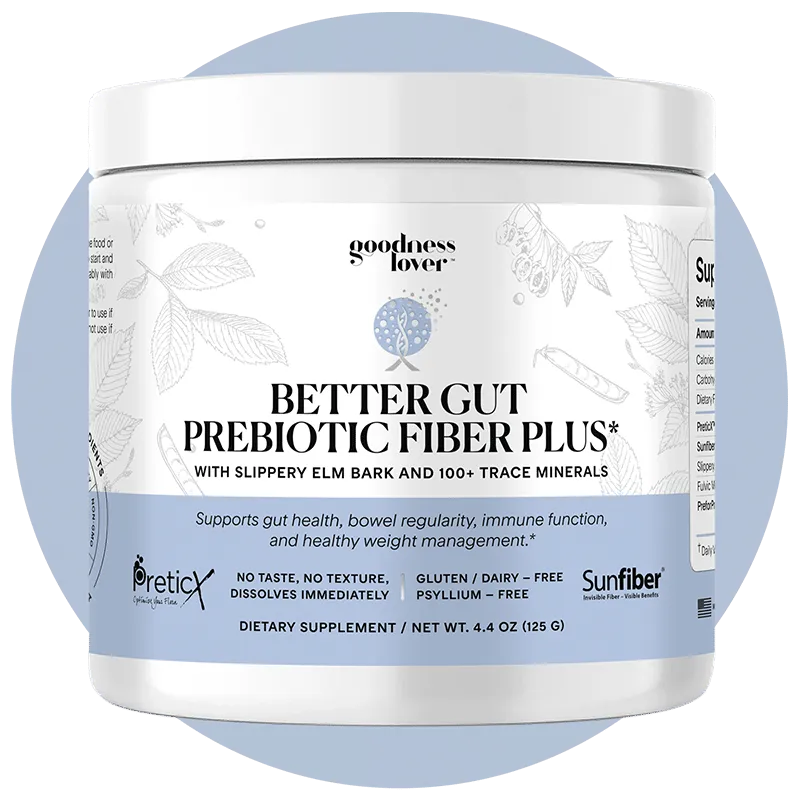
- Naturopath access · Inner Circle$47/mo value
- Free shipping✓
- 30-Day Money-Back Guarantee✓
- Cancel, skip, or pause anytime✓
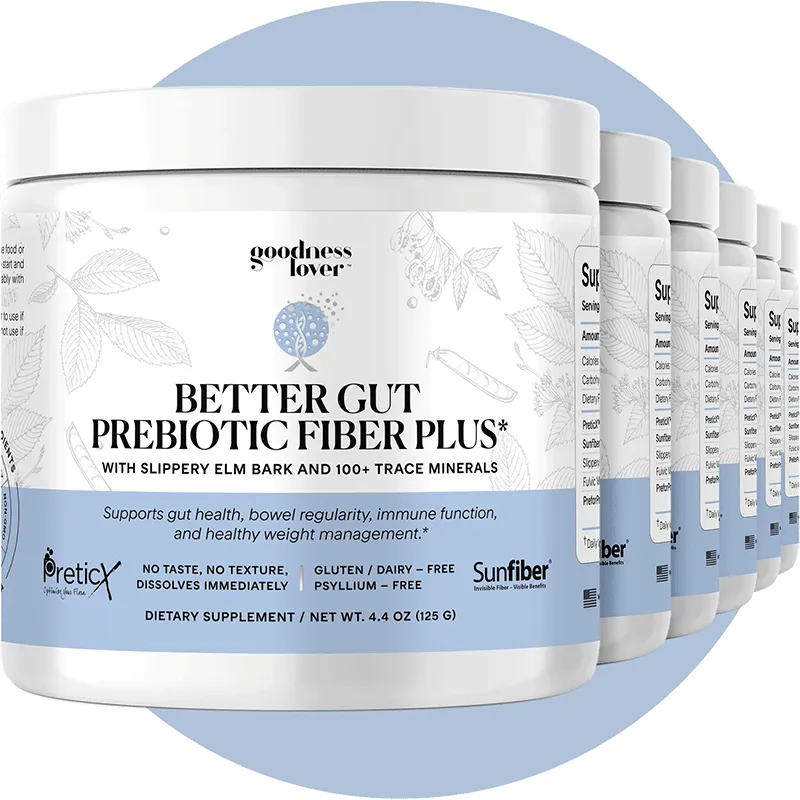
- Plus
- Microbiome Makeover Cooking Program$197 value
- Feeding Your Inner Garden ebook$47 value
- Microbiome + Immunity Masterclass$197 value
- 28-Day Gut Restore Meal Plan$247 value
- Just Peachy Tumbler (first 100)$38 value
- Naturopath access · Inner Circle$47/mo value
- Free shipping✓
- 30-Day Money-Back Guarantee✓
- Cancel, skip, or pause anytime✓
- Plus
- Microbiome Makeover Cooking Program$197 value
- Feeding Your Inner Garden ebook$47 value
- Naturopath access · Inner Circle$47/mo value
- Free shipping✓
- 30-Day Money-Back Guarantee✓
- Cancel, skip, or pause anytime✓
33% off the 6-bottle until midnight Sunday, ET. After cart closes, the recurring 25% subscription rate is the best ongoing price — and the Masterclass, Meal Plan, and Tumbler aren't included.
If I were to recommend one... it's the 6-bottle. Longer consistent use gives your microbiome more time to adapt, and this is the deepest discount we've ever offered on Better Gut.

30-Day Money-Back Guarantee
Try it for 30 days. If the bloating hasn't improved, if your digestion hasn't started getting more predictable, email us and we'll refund you. No forms, no fuss, no hoops. The guarantee is there for exactly this moment — the hardest part of any of this is starting.
More women. Same pattern.
Real customers, in their own words.

FAQs
Will this bloat me like other fiber supplements?
One scoop or two?
How long until I see results?
Will I be locked into a subscription?
Is this safe with my medications?
Can I take this if I'm on a GLP-1 medication?
Is the formula vegan?
Cart closes Sunday 24 May, midnight ET
After that, three things happen.
— The bonus stack (up to $726 depending on tier) goes back into the vault.
— The 6-bottle subscription pricing disappears. It's the deepest discount we've ever offered on Better Gut, and it's not coming back at this price this year.
— If you're in the first 100 on the 6-bottle option, the Just Peachy Tumbler ships with your first order. Once we hit 100, it's gone.